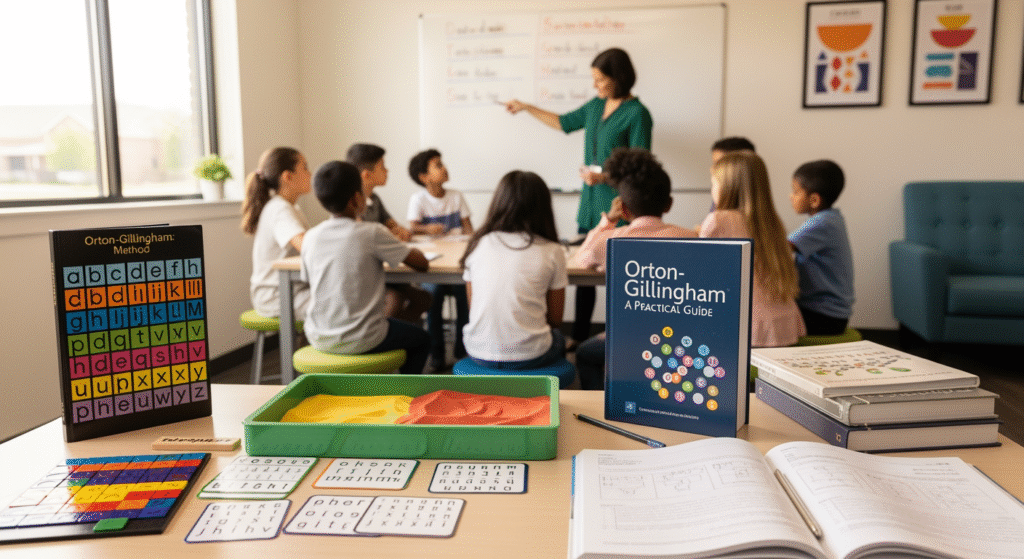
I’ve worked with many families searching for a solid reading plan that actually helps kids who struggle with decoding, fluency, and confidence. If you’re comparing options, the curriculum with the Orton-Gillingham approach in Gwinnett County is worth a close look. For trusted background on federal reading guidance and literacy supports, the U.S. Department of Education has useful resources for educators and families at ed.gov.
Why Orton-Gillingham matters for students in Gwinnett County
Orton-Gillingham is a structured literacy method built to teach reading and spelling explicitly. In our schools and clinics around Gwinnett County, parents often tell me the same thing: traditional reading instruction didn’t stick. Orton-Gillingham breaks skills into small, teachable pieces and uses multiple senses. That makes it especially effective for students with dyslexia or persistent decoding difficulties.
How this approach looks in practice
When I visit classrooms and tutoring rooms, I notice a predictable pattern: lessons are short, focused, and cyclical. Teachers introduce a sound or pattern, show it visually, ask students to say it, practice writing it, and then apply it in reading and spelling. This multisensory loop—visual, auditory, kinesthetic—builds strong memory traces for kids who need more than one exposure to a concept.
Local context: Gwinnett County families and reading challenges
Gwinnett County is large and diverse, and families here can face different barriers to reading success: limited access to targeted interventions, variations in school resources, and the need for trained specialists. Across this area, from Lawrenceville to Duluth and Suwanee to Buford, I’ve seen how an individualized, Orton-Gillingham-based curriculum can change the trajectory for a child who’s fallen behind.
A quick reality check
National estimates suggest that a sizable portion of learners show characteristics of dyslexia or other reading differences. That’s why choosing a curriculum grounded in structured literacy—like Orton-Gillingham—matters. It’s not about labels; it’s about giving a child consistent, sequential instruction that actually builds decoding and fluency.
Key features to look for in an Orton-Gillingham curriculum
Not all programs that claim “Orton-Gillingham” follow the same model. Here are features that consistently signal a high-quality curriculum and trained staff:
- Systematic scope and sequence that builds from simple to complex skills.
- Multisensory lesson design—visual, auditory, and kinesthetic activities integrated every lesson.
- Ongoing assessment and data-driven lesson adjustments for each student.
- Explicit instruction in phonology, morphology, syntax, and semantics.
What families should ask when they tour a school or program
Ask whether instructors have formal Orton-Gillingham training and how they monitor progress. Find out how individualized lesson plans are, and whether the curriculum includes explicit instruction in spelling rules and word patterns. A good program can show you sample lesson plans and recent progress data without revealing any private information.
How a school-based Orton-Gillingham curriculum helps daily learning
I often hear from parents who want immediate, practical benefits: improved decoding, better spelling, and more confidence when reading aloud in class. A curriculum rooted in Orton-Gillingham can deliver those outcomes because it targets the building blocks of reading, not just sight words or context guessing strategies.
Typical student progress over time
Progress looks different for every child, but you can usually expect steady gains when instruction is consistent, frequent, and tuned to the student’s needs. Students who receive daily or several-times-weekly lessons show stronger improvements than those who rely on infrequent supports. The curriculum also emphasizes generalization so children apply skills across subjects—not just in reading groups.
Actionable steps families can take right now
If you’re in Gwinnett County and wondering how to move forward, I recommend a clear, practical plan. These steps help parents evaluate programs and support their child between sessions.
- Request a structured reading evaluation that reports specific skill gaps (phonemic awareness, decoding, fluency, etc.).
- Confirm the frequency and duration of Orton-Gillingham instruction—look for multiple sessions per week when possible.
- Ask for daily or weekly home practice tasks that reinforce taught skills in short, focused segments.
- Track small wins: note improved decoding, fewer errors in spelling patterns, and increased reading stamina.
Program design that supports learners beyond reading lessons
Strong programs blend direct Orton-Gillingham lessons with classroom accommodations and social-emotional support. For example, teachers can provide extra time on tests, pre-teach vocabulary from a lesson, and use audiobooks so students access grade-level content while their decoding improves. The best solutions treat reading as part of full academic and personal development.
Integration with classroom instruction
When Orton-Gillingham-trained instructors communicate regularly with classroom teachers, students get consistency. That collaboration ensures that phonics patterns taught in intervention show up in classroom reading and writing tasks, accelerating transfer and retention.
Trending topics in dyslexia education you’ll see locally
Two trends are shaping how Gwinnett County families approach reading support right now. First, structured literacy is getting broader recognition among school districts—more schools are adopting research-driven frameworks. Second, technology is enhancing Orton-Gillingham delivery: adaptive practice apps, video modeling, and teletherapy options are expanding access for families on busy schedules.
What that means for families
More recognition of structured literacy means stronger advocacy tools for parents asking for appropriate instruction. And technology can be a helpful supplement—especially for consistent practice between live lessons—but it doesn’t replace the trained teacher-led multisensory component that makes Orton-Gillingham work.
How to evaluate local options in Gwinnett County
Visiting programs and asking targeted questions will save time. Here’s how I evaluate a program when I visit a school or private clinic in the area:
- Observe a live lesson if possible. Is instruction fast-paced, explicit, and multisensory?
- Ask about teacher training. Has staff completed Orton-Gillingham certification or comparable structured literacy training?
- Request sample progress reports showing baseline and growth measures for reading skills.
- Confirm collaboration strategies with classroom teachers and special educators.
Common pitfalls and how to avoid them
Families often run into three predictable issues: inconsistent instruction, programs claiming Orton-Gillingham without fidelity, and gaps between intervention and classroom practice. You can avoid these by looking for verified training for instructors, consistent scheduling, and clear progress monitoring. If a program can’t show how they measure and report progress, that’s a red flag.
Practical tips to keep momentum
Keep interventions consistent, track small wins, and advocate for classroom alignment. Small daily practice (5–10 minutes) that matches the lesson focus is more powerful than longer, unfocused sessions. Celebrate progress to build confidence—kids respond to visible signs of improvement.
How a structured Orton-Gillingham curriculum solves real problems
Here’s what families typically gain from a well-run Orton-Gillingham program in this area: clearer decoding strategies, reduced reading-related anxiety, measurable gains in spelling and fluency, and better access to grade-level content. Those changes aren’t merely academic; they help kids feel capable and engaged at school.
Examples of measurable outcomes
Outcomes vary, but successful programs can demonstrate improved decoding scores, faster reading rates, and stronger spelling accuracy. Importantly, effective programs also reduce the number of errors students make when reading aloud and help them read more independently across subjects.
Final thoughts and next steps for families in Gwinnett County
If you’re weighing options for a curriculum with the Orton-Gillingham approach in Gwinnett County, start with an evaluation, prioritize programs with trained instructors, and insist on regular progress data. Look for sites that integrate Orton-Gillingham lessons with classroom supports and family-friendly practice plans. With steady instruction and the right tools, students who once struggled can become confident, capable readers.
Ready to explore a local program that uses structured, multisensory literacy methods to support learners across Gwinnett County? Learn more about the school and its Orton-Gillingham history and offerings by visiting SAGE School.